Newport, Rhode Island has long been a destination for sailors, yacht owners, builders, brokers, racing programs, and marine professionals. It is also a marketplace where a buyer searching from Massachusetts, Connecticut, New York, or much farther away may find a yacht worth traveling for.
But finding the right yacht in Newport raises a practical question:
How do you confidently buy a yacht in Rhode Island when you live somewhere else?
An out-of-state purchase does not necessarily make the yacht-buying process more difficult. It does, however, make preparation and coordination more important. You may need to evaluate listings remotely, decide when a trip to Newport is worthwhile, coordinate a survey and sea trial, review documentation from a distance, and determine what will happen to the yacht after closing.
The goal should not be to eliminate every trip to Newport. It should be to make each step—and each trip—count.
Bluenose Yacht Sales maintains a sales and brokerage office at 1 Commercial Wharf in Newport, giving buyers access to local brokerage support while searching a much broader yacht market.
Here is what an out-of-state buyer should consider before purchasing a yacht in Newport.
1. Define Your Search Before You Travel
The easiest way to waste a trip to Newport is to begin with an overly broad search.
Before scheduling showings, establish the fundamentals of what you actually need from the yacht:
- Sail or power
- Approximate size range
- New or brokerage
- Intended cruising area
- Typical number of people aboard
- Overnight accommodations
- Performance expectations
- Draft or bridge-clearance limitations
- Equipment priorities
- Purchase budget
- Expected ownership and maintenance budget
Try to separate requirements from preferences.
If your cruising plans require two private cabins, that may be a requirement. If you prefer a particular interior finish, that may be negotiable. If you need shoal draft for your intended cruising grounds, that deserves more weight than a cosmetic feature you could change later.
The clearer your criteria are before traveling, the easier it becomes to eliminate yachts that look appealing online but do not actually fit your plans.
2. Do as Much Due Diligence as Possible Before Booking a Trip
An online listing should begin your evaluation, not complete it.
Before traveling to see a brokerage yacht, ask for enough information to determine whether an in-person inspection is justified.
Depending on the vessel, useful information may include:
- Additional current photographs
- Equipment specifications
- Engine hours where applicable
- Maintenance and service records
- Major upgrade history
- Sail and rigging information
- Electronics
- Generator and auxiliary equipment
- Recent yard work
- Storage history
- Known deficiencies
- Items excluded from the sale
If something important is unclear in the listing, ask about it before making travel arrangements.
A buyer traveling several hours—or flying into the region—has more reason than a local shopper to qualify the yacht carefully before the first viewing.
That does not mean expecting the broker or seller to replace a professional survey. It means avoiding unnecessary trips when basic information already shows that the yacht is not a good candidate.
3. Use Your First Newport Visit to Evaluate More Than Appearance
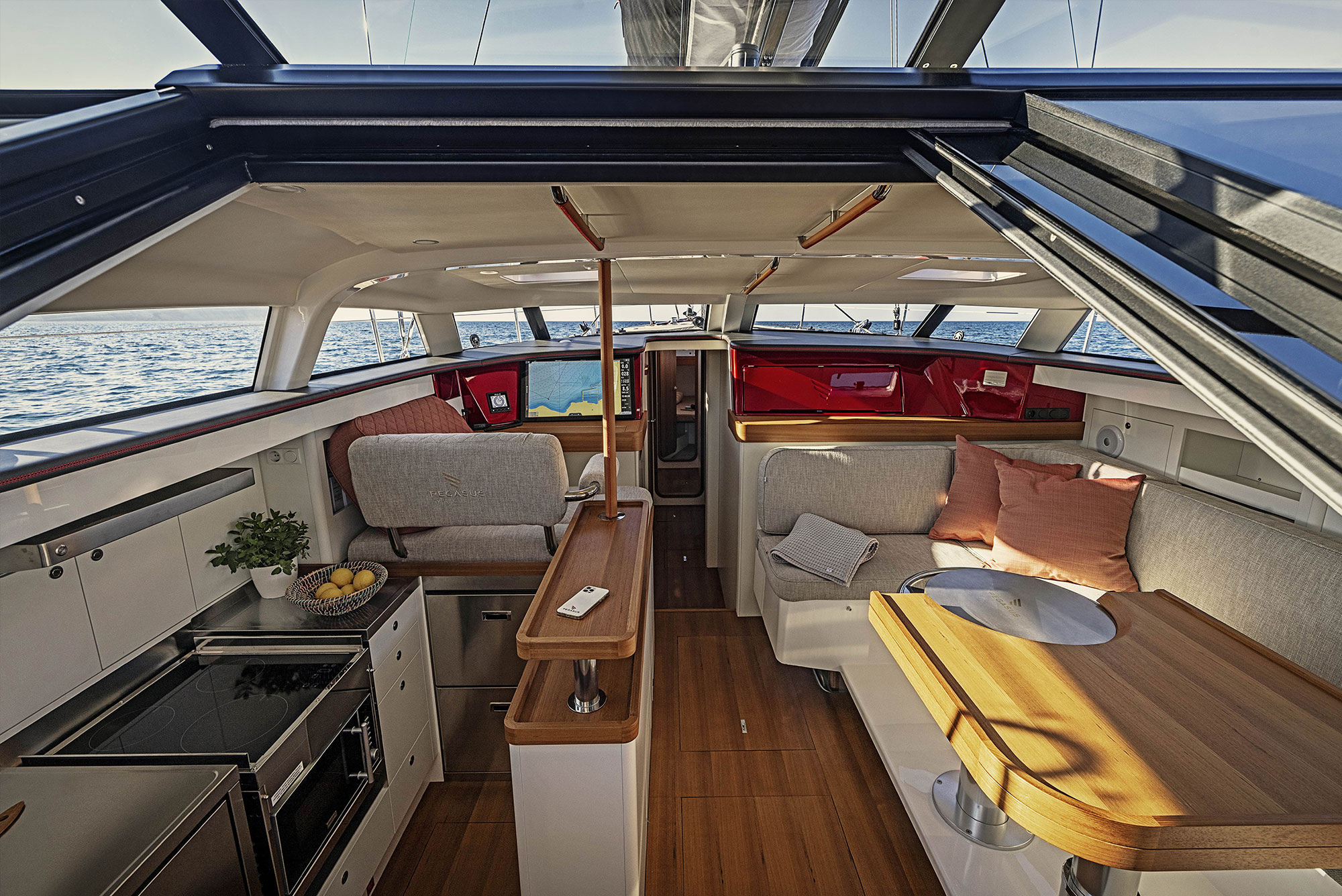
Professional yacht photography is designed to present a vessel well. The first physical inspection is where you begin determining whether the actual yacht supports the impression created by the listing.
Take your time.
Walk through the boat with your original requirements in mind. Look beyond finishes and staging to consider how the yacht would work in everyday use.
On a sailboat, consider:
- Cockpit ergonomics
- Visibility from the helm
- Sail-handling arrangement
- Deck access
- Winch and control locations
- Rigging condition visible without specialized inspection
- Engine access
- Storage
- Ventilation
- Cabin arrangement
On a power yacht, consider:
- Helm visibility
- Engine-room or machinery access
- Side-deck movement
- Boarding
- Cockpit and entertaining spaces
- Tender storage
- Generator and systems access
- Fuel and water capacity relative to intended use
- Cabin configuration
This is also the time to ask practical ownership questions.
Do not try to turn the showing into your own marine survey. The purpose of the first inspection is to decide whether the yacht deserves to advance to the next stage.
4. Work With a Broker Who Can Coordinate the Local Details
Distance makes coordination more important.
A local yacht broker can help arrange showings, communicate with the listing side, organize transaction deadlines, and help coordinate the professionals needed as the purchase progresses.
For an out-of-state buyer, local support can be particularly useful when several parties need to be in the same place at the same time.
A pre-purchase survey, for example, may involve:
- The buyer
- Yacht brokers
- A marine surveyor
- A boatyard or marina
- A haul-out facility
- An engine specialist in some transactions
- The vessel itself being available and operational
A buyer does not need to personally coordinate every moving part, but should understand what is happening and when. Bluenose’s New England yacht brokerage guide provides additional context on the broader purchase process.
5. Make an Offer Based on the Yacht and the Market
Once you have identified a serious candidate, the next step may be a written offer.
Do not assume that buying from another state changes the fundamentals of how much to offer on a used yacht.
The asking price should be considered alongside:
- Comparable yachts
- Condition
- Equipment
- Significant upgrades
- Price history
- Time on market
- Current demand
- Known near-term expenses
- The terms of the proposed transaction
The strongest approach is not automatically to subtract a standard percentage from the asking price. It is to determine what the particular yacht is worth in the context of the market and your ownership plans.
6. Understand What Happens After the Seller Accepts Your Offer
An accepted offer is an important milestone, but it is not the same thing as completing the purchase.
The written purchase agreement establishes the transaction terms and applicable deadlines. Depending on the transaction, the next stages can include a deposit, marine survey, haul-out, sea trial, acceptance or rejection decisions, financing or insurance arrangements, documentation, and closing.
Read the purchase agreement carefully. Make sure you understand its deadlines and contingencies rather than relying on assumptions about how yacht transactions “usually” work.
For an out-of-state buyer, deadlines deserve particular attention because travel and scheduling can add another layer of coordination.
7. Plan the Pre-Purchase Survey Carefully
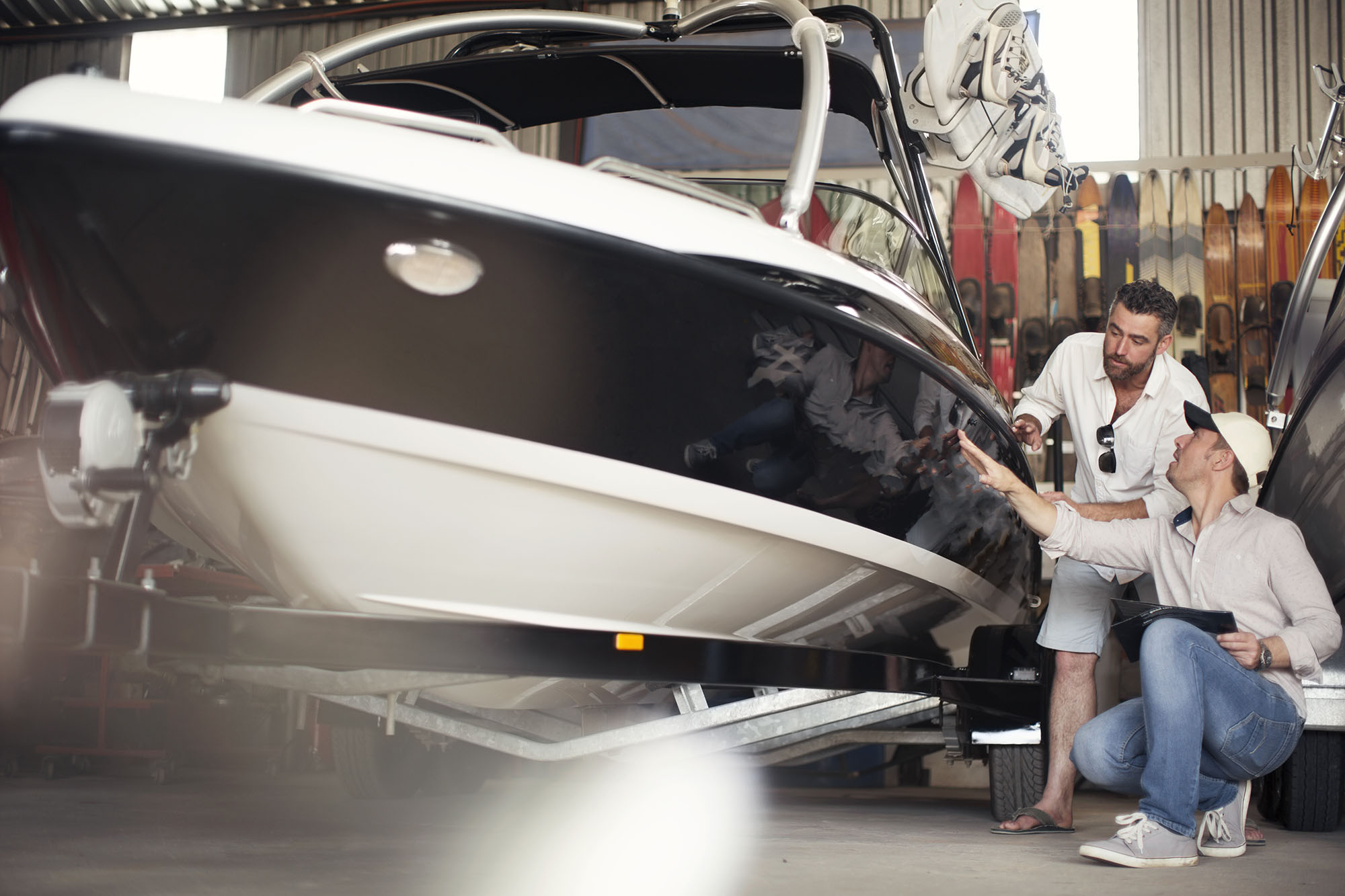
A professional pre-purchase survey is one of the most important due-diligence steps in buying a brokerage yacht.
For an out-of-state buyer, there is another question: Should you travel to Newport for the survey?
When practical, being present can be valuable.
A survey is not merely a pass/fail inspection. It is an opportunity to spend hours around the yacht while an independent professional examines its structure, systems, equipment, and overall condition.
Being there allows you to see findings firsthand and ask questions.
If attending is impractical, discuss that situation with your surveyor and broker in advance. Determine how findings will be communicated, what photographs or reports you will receive, and how questions will be handled.
Most importantly, hire the surveyor to represent your due-diligence interests and understand the scope of the survey before it begins. For more detail, review Bluenose’s pre-purchase yacht survey guide.
8. Treat the Sea Trial as More Than a Boat Ride
A sea trial gives you an opportunity to evaluate the yacht underway and observe systems under operating conditions.
What matters depends heavily on the vessel.
On a sailing yacht, you may be paying attention to engine operation, steering, maneuverability, sail handling, deck layout, visibility, and how the boat feels underway.
On a power yacht, considerations can include engine performance, steering, vibration, visibility, maneuverability, onboard systems, and how the vessel performs at relevant operating speeds.
The surveyor may have specific tests or observations to make during the sea trial as part of the survey process.
As the buyer, use the opportunity to answer a different question as well: Does this yacht actually feel right for the way I intend to use it?
9. Think About Delivery Before Closing Day
An out-of-state buyer should decide early what is likely to happen to the yacht after the transaction closes.
Possible plans include:
- Keeping the yacht in Rhode Island
- Moving it to another New England harbor
- Sailing or motoring it to its new home
- Hiring a professional delivery captain
- Transporting it over land where appropriate
- Arranging longer-distance yacht transport
The right solution depends on the yacht, destination, season, owner’s experience, insurance requirements, and practical logistics.
Do not wait until closing day to discover that moving the yacht home requires arrangements you have not made.
For a buyer planning to keep the yacht in Newport or elsewhere in Rhode Island, registration, documentation, insurance, and related ownership requirements are also worth understanding in advance. Because those requirements depend on the vessel and the buyer’s circumstances, verify the rules that apply to your specific transaction with the appropriate authorities and professionals.
10. Don’t Confuse Where You Buy the Yacht With Where You Will Own It
Buying a yacht located in Newport does not necessarily mean Newport will become its home port.
That distinction matters.
Before closing, consider where the yacht will actually be:
- Moored or docked
- Stored during the off-season
- Insured
- Serviced
- Registered or documented as applicable
- Primarily operated
If you are buying in Rhode Island but taking the yacht to another state, your post-purchase registration, documentation, insurance, and other ownership requirements may differ from those of an owner who plans to keep the vessel in Newport.
The purpose of doing this early is simple: you want the first weeks of ownership to be about getting to know the yacht—not untangling logistics that could have been planned before closing.
11. Consider Newport’s Seasonality When Planning the Purchase
New England yacht buying is affected by the calendar.
A yacht may be:
- In the water and ready for showings
- Stored ashore
- Winterized
- Undergoing spring commissioning
- Scheduled for launch
- Being actively used by the owner
- Preparing for seasonal storage
Those circumstances can affect how long the yacht-buying process takes, including how quickly a showing, survey, haul-out, or sea trial can be arranged.
Out-of-state buyers should therefore ask about the yacht’s current status before finalizing travel plans.
12. Use Your Broker to Make Each Trip More Productive
A good out-of-state yacht search should become progressively more focused.
The first conversation establishes what you need.
Remote research eliminates poor fits.
A Newport visit lets you evaluate serious candidates.
An offer moves the best candidate into formal due diligence.
The survey and sea trial help you decide whether that yacht should become yours.
That is very different from flying into Rhode Island and spending a weekend wandering from listing to listing without a defined strategy.
For buyers coming from outside Rhode Island, local presence can help connect the online search with the practical work of viewing, evaluating, surveying, and ultimately purchasing the right yacht.
Frequently Asked Questions About Buying a Yacht in Newport, RI
Can I buy a yacht in Rhode Island if I live in another state?
Yes. Living outside Rhode Island does not prevent you from purchasing a yacht located there. Where the yacht will principally be kept and how it will be owned can affect registration and other requirements.
Do I need to travel to Newport before making an offer?
Not necessarily. Buyers can conduct substantial preliminary research remotely. However, an in-person inspection before committing significant time and money to the purchase can be valuable whenever practical.
Should I attend the yacht survey in person?
When practical, attending can provide an opportunity to learn about the yacht and ask the surveyor questions directly. If distance makes that impossible, establish in advance how findings will be documented and communicated.
Do I need a Rhode Island yacht broker?
You do not need to choose a broker simply because of an address. What matters is knowledgeable representation and effective coordination. For a yacht located in Newport, local familiarity can make showings, surveys, haul-outs, sea trials, and closing preparation easier to coordinate.
Can I keep a yacht in Rhode Island if I am not a Rhode Island resident?
Yes, subject to applicable registration and ownership requirements. Verify current rules for your specific vessel and ownership circumstances.
What should I do before traveling to see a yacht in Newport?
Review the complete listing, ask for additional information and maintenance history where available, clarify known issues, determine whether the yacht meets your non-negotiable requirements, and coordinate the showing in advance.
Buying From Out of State Should Make You More Prepared, Not Less Confident
Distance changes some of the logistics of buying a yacht, but it does not change the fundamentals of making a sound purchase.
Know what you need. Research candidates before traveling. Inspect serious prospects carefully. Make an informed offer. Understand your purchase agreement. Use qualified professionals for the survey and other due diligence. Plan where the yacht will go after closing before it officially becomes yours.
With those pieces in place, buying a yacht in Newport can be a manageable process even when home is hundreds—or thousands—of miles away.
Looking for a Yacht in Newport?
Browse Bluenose Yacht Sales’ current yachts for sale, or contact the Bluenose Newport yacht sales and brokerage team to discuss what you are looking for before planning your trip. With a Newport office at 1 Commercial Wharf and additional Bluenose locations across New England, the team can help you narrow your search, coordinate the buying process, and move from promising online listings to a yacht that fits the way you want to spend your time on the water.