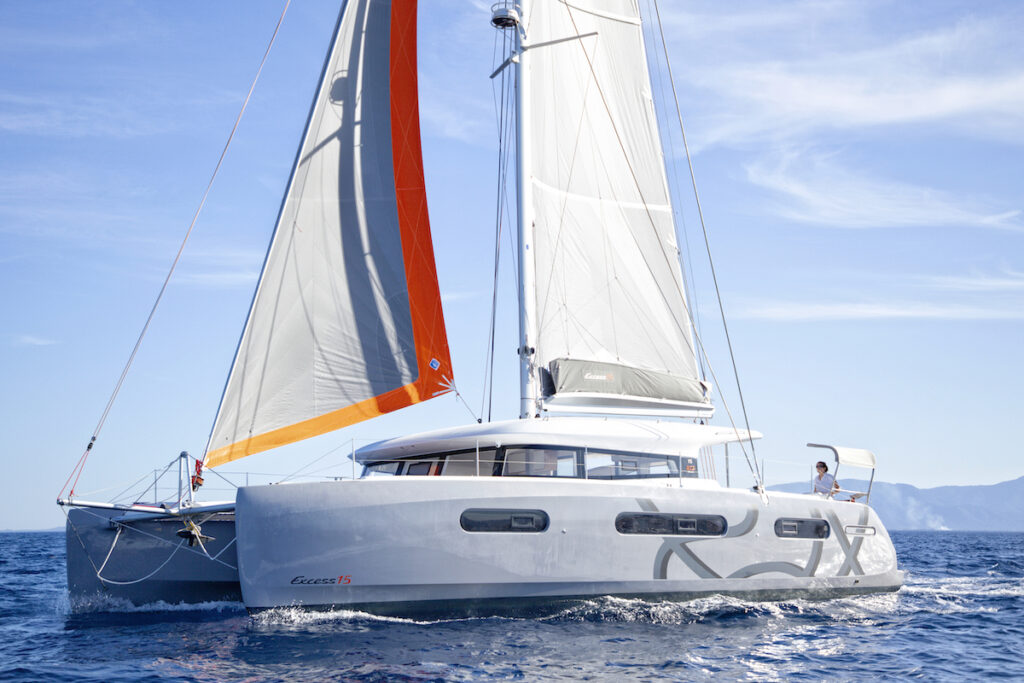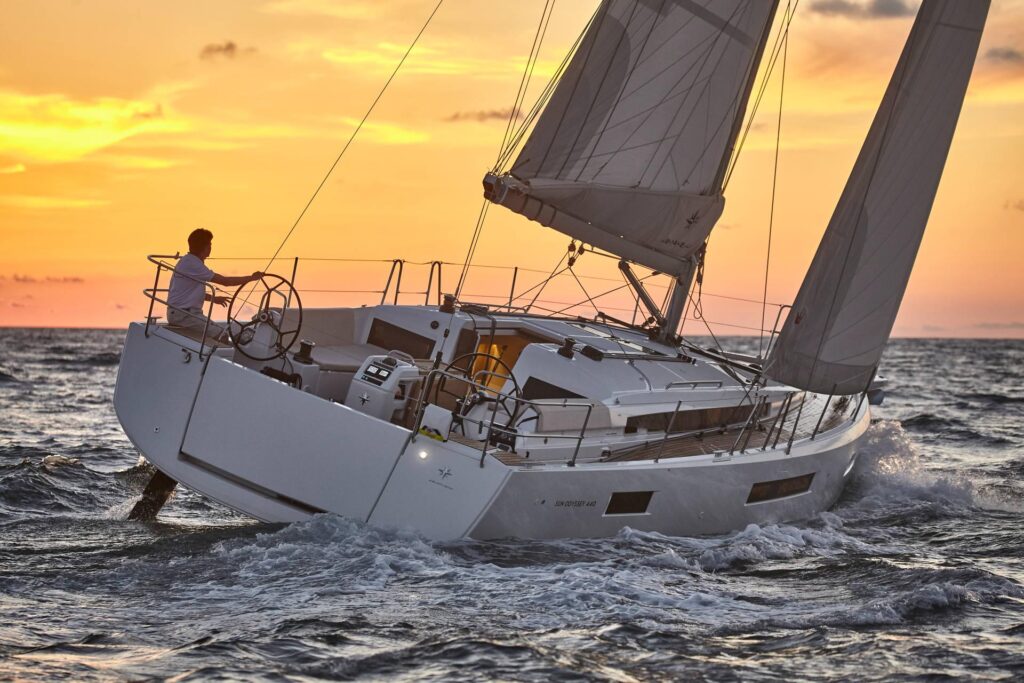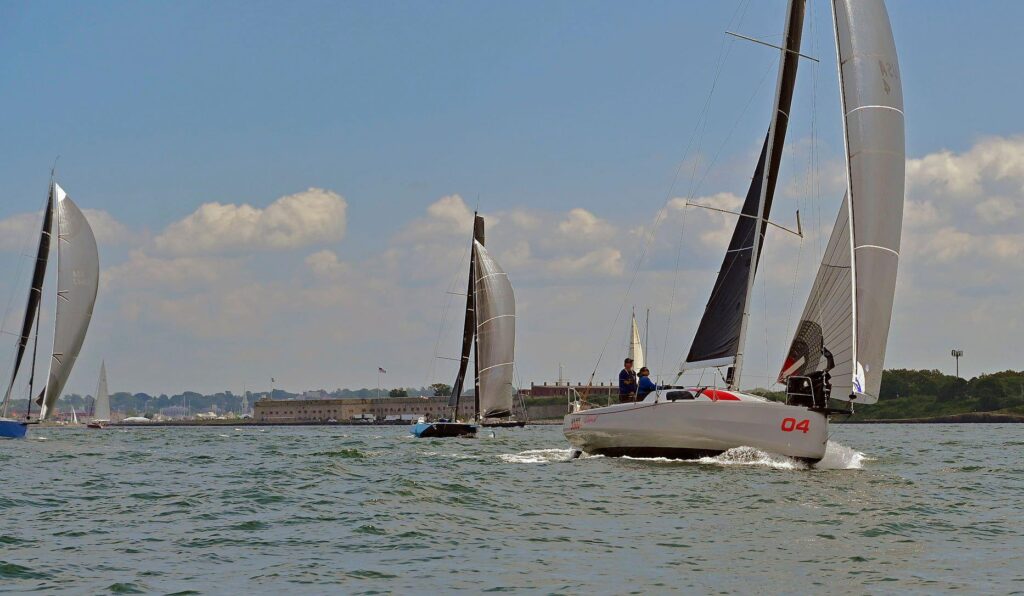
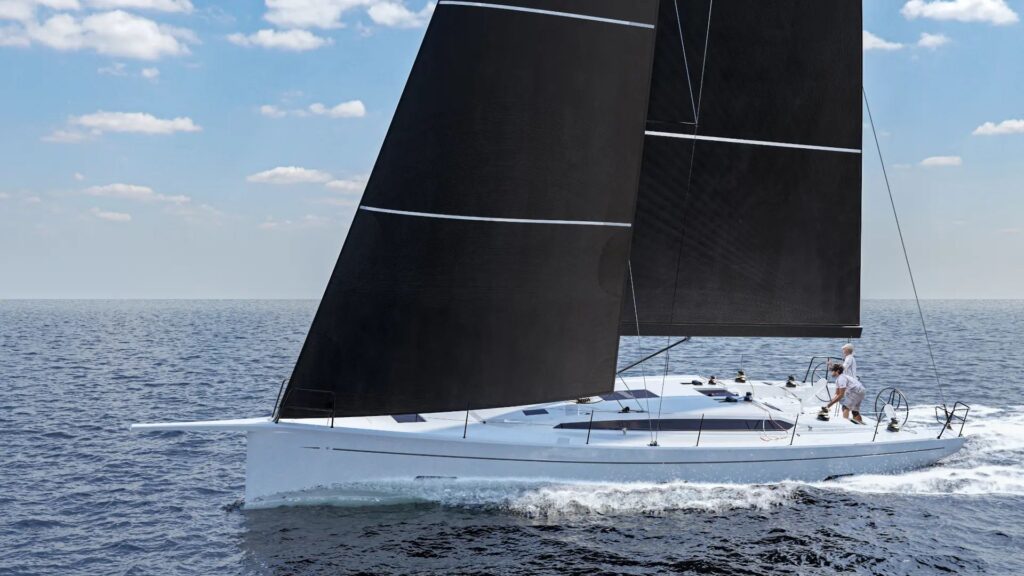
Sailboat or powerboat?
It sounds like a basic question, but the answer affects nearly everything about yacht ownership: how you travel, how much water you can cover in a day, what you do while underway, the systems you maintain, how you plan around weather, and even what makes a successful day on the water.
The mistake is choosing based on which type of yacht you admire more at the dock.
A better question is: How do you actually want to spend your time on the water?
If operating the yacht and working with the wind are central to the experience you want, a sailboat has an obvious appeal. If your priority is reaching destinations efficiently, maximizing usable space, or fitting more boating into limited time, a powerboat may suit you better.
Neither is universally better.
Bluenose Yacht Sales works with both sail and power boats, so the useful comparison starts with the buyer—not with trying to declare a winner.
Here are the questions to ask before you start comparing individual yachts.
1. Is the Journey Part of the Activity—or Are You Trying to Get Somewhere?
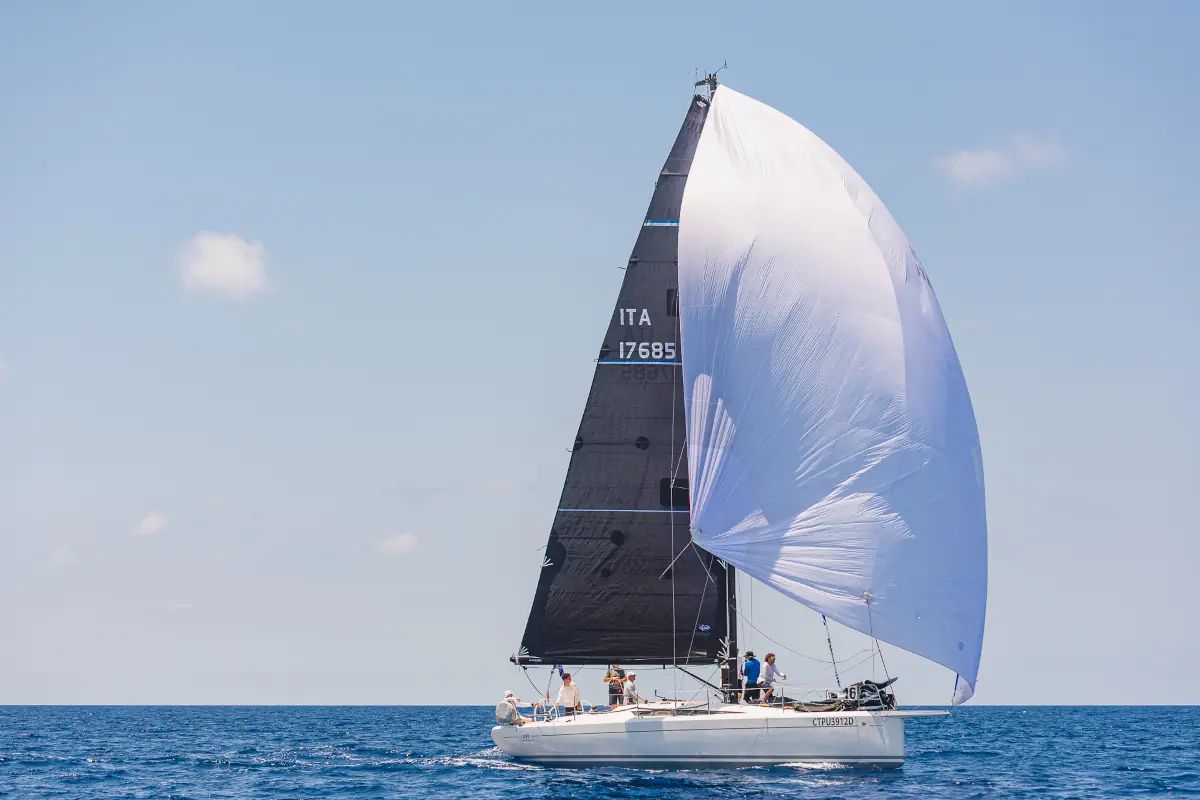
This may be the most useful distinction in the entire sailboat-versus-powerboat decision.
For many sailors, sailing is the day’s activity.
You trim sails, respond to changing wind, choose the best course, adjust as conditions change, and enjoy the satisfaction of making the yacht perform well. The trip between two harbors is not simply transportation. It is the reason to leave the dock.
Powerboating can be highly engaging too, but it offers a different relationship with time and distance.
If you want to leave Newport in the morning, cover more water, spend several hours at another destination, and potentially return the same day, speed becomes valuable. A powerboat can make certain itineraries practical that would require much more time under sail.
Ask yourself: When I imagine a great day aboard, am I picturing the passage—or what I will do when I arrive?
2. How Much Time Do You Usually Have?
Buy the yacht for the time you actually have—not the time you hope to have someday.
If most of your boating happens during weekends, a boat that allows you to reach destinations more quickly may expand the practical cruising area available to you.
If you enjoy spending the entire day underway and do not view a slower passage as lost time, sailing may fit perfectly.
This becomes particularly relevant in New England, where an owner might want to explore Narragansett Bay, Buzzards Bay, Cape Cod, the Elizabeth Islands, Block Island, Long Island Sound, or farther up the coast.
The useful question is: How much of my available boating time do I want to spend getting there?
Do not choose based solely on maximum advertised speed. Weather, sea state, hull design, fuel considerations, visibility, comfort, and local conditions all affect real-world passage planning.
3. Do You Want to Learn and Practice Sailing?
A sailing yacht asks more from its owner in one important respect: sailing itself is a skill.
You need to understand concepts such as:
- Points of sail
- Sail trim
- Tacking and jibing
- Reefing
- Wind awareness
- Sail handling
- Rigging
- Weather
- Crew coordination
That learning process is precisely why many people choose sailing.
Becoming a better sailor can remain rewarding for decades.
But not every prospective owner wants that to be the focus.
If you primarily want to get family and friends aboard, leave the dock, and reach a destination without making sailing itself central to the experience, power may be the more natural starting point.
That does not mean powerboats require no skill or training. Safe powerboat operation still requires competent navigation, docking, weather judgment, rules-of-the-road knowledge, systems understanding, and good seamanship.
4. Who Will Usually Be Aboard?
Do not choose your yacht around the largest group you might host once a year.
Think about your normal crew.
Will you usually boat:
- Alone?
- As a couple?
- With young children?
- With another couple?
- With a large family?
- With guests who have little boating experience?
- With experienced sailors?
A yacht that is enjoyable for two people to operate may be very different from one selected primarily for entertaining.
Consider how people will move through the yacht. Look at seating, boarding, cockpit arrangement, cabin privacy, galley location, head access, sun protection, and storage.
There is no universal rule that says one propulsion type is better for families or couples. Layout matters as much as the sail-versus-power label.
5. How Important Is Speed?
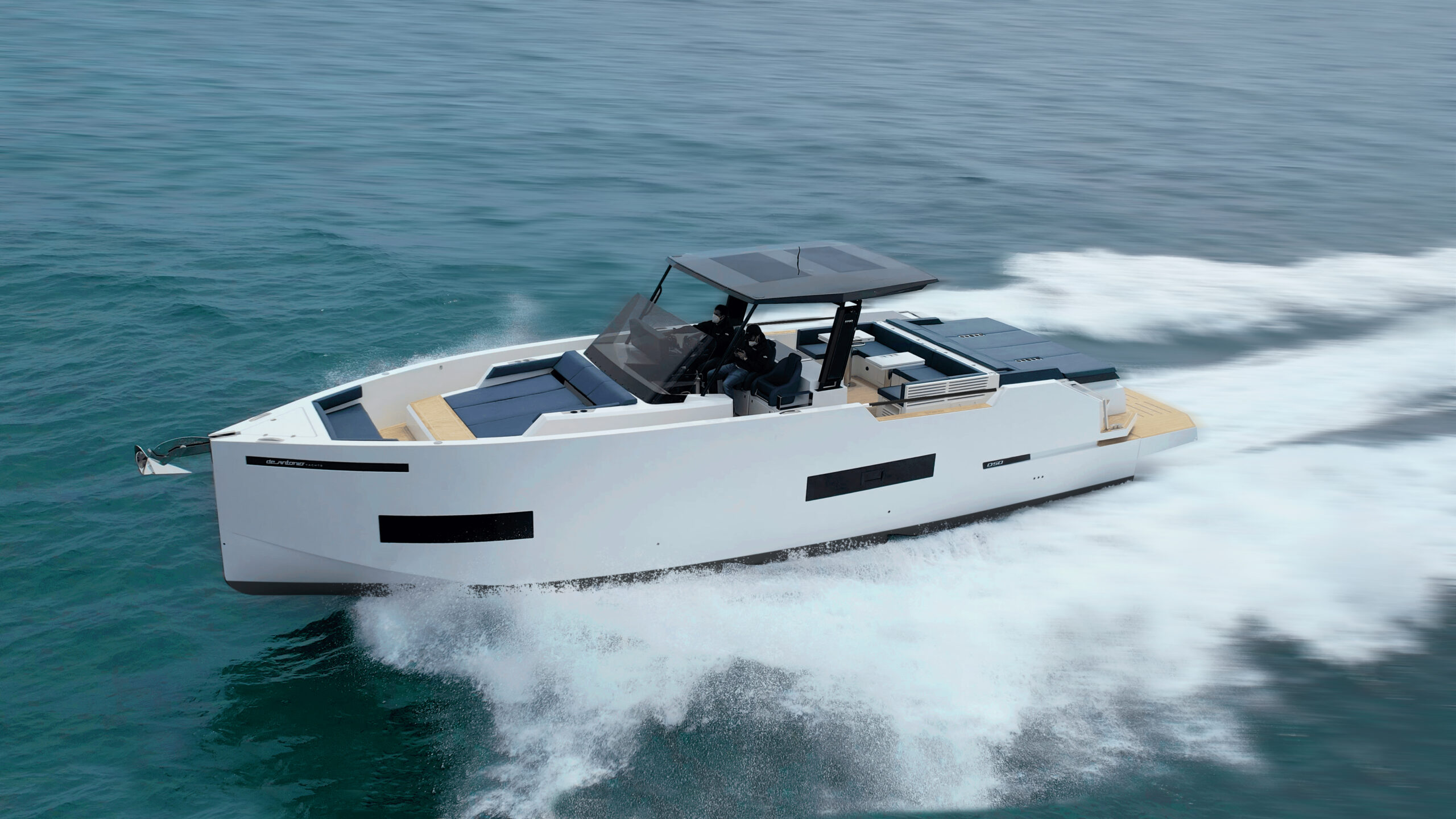
This is the obvious difference, but buyers should think about what speed actually changes for them.
More speed can mean:
- Reaching destinations sooner
- Covering more coastline in a day
- Making shorter outings worthwhile
- Expanding your practical weekend cruising radius
- Spending more time at the destination
But speed has tradeoffs.
Higher-speed operation can increase fuel consumption, and comfort at speed depends on hull design and sea conditions. Owning a fast yacht does not mean conditions will always make its preferred cruising speed appropriate.
Sailing changes the calculation.
A sailing yacht may cover less distance during the same number of daylight hours, but if sailing itself is the experience you came for, that is not necessarily a disadvantage.
Do not ask simply: Which is faster? Ask: What would I do differently if my yacht were faster?
6. Compare Ownership Costs by Actual Yacht—not Stereotype
A common shortcut is: Sailboats are cheap. Powerboats are expensive.
That is not a useful purchasing rule.
Sailing can substantially reduce dependence on fuel while underway, but a sailing yacht has systems and equipment of its own:
- Sails
- Standing rigging
- Running rigging
- Winches
- Mast and boom
- Sail-handling systems
- Auxiliary engine
- Deck hardware
Powerboats replace the sailing rig with a different equipment and operating profile that may include:
- Larger engines
- Multiple engines
- Greater fuel consumption
- Generator systems
- Drives or running gear
- More powerful electrical systems
- Other equipment depending on the yacht
Then both categories can involve:
- Insurance
- Dockage
- Storage
- Haul-outs
- Bottom maintenance
- Electronics
- Plumbing
- Batteries
- HVAC
- Safety equipment
- Cosmetic maintenance
- Repairs and upgrades
So compare the actual yachts you are considering.
Purchase price is only the beginning. For a fuller budgeting picture, review Bluenose’s guide to the costs of yacht ownership.
7. How Do You Feel About Fuel Use and Range Planning?
Fuel is one of the clearest operational differences between sail and power.
A sailing yacht can use wind as its primary means of propulsion while retaining an auxiliary engine for maneuvering, calms, charging, and other needs.
A powerboat depends on its engines for propulsion, making fuel consumption and range more central to passage planning.
That does not automatically mean a sailboat has “unlimited range,” nor does it mean every powerboat has poor range.
Hull design, tankage, engine selection, speed, conditions, vessel loading, and operating style all matter.
If you are comparing powerboats, pay attention to realistic fuel burn and range at the speeds you expect to use—not just top speed.
If you are comparing sailboats, consider how frequently your likely cruising conditions and schedule would lead you to motor rather than sail.
8. What Kind of Cruising Do You Actually Plan to Do?
“Cruising” can mean very different things.
For one owner, it means sailing from Newport to Block Island and spending the weekend at anchor.
For another, it means a quick run to a waterfront restaurant.
For another, it means extended coastal passages.
Someone else may primarily dayboat with friends and return to the same marina every evening.
Before choosing sail or power, write down your five most likely trips. Not dream trips. Likely trips.
Where would you leave from? Where would you go? How many people would come? How long would you stay? Would you anchor or use marinas? How much gear would you carry? How much time would you have?
For New England buyers, consider practical local factors such as typical passage distances, tides and currents, water depth, bridge clearance, marina availability, mooring availability, seasonal weather, storage options, haul-out access, fuel availability, and your home port.
9. How Important Is Interior and Entertaining Space?
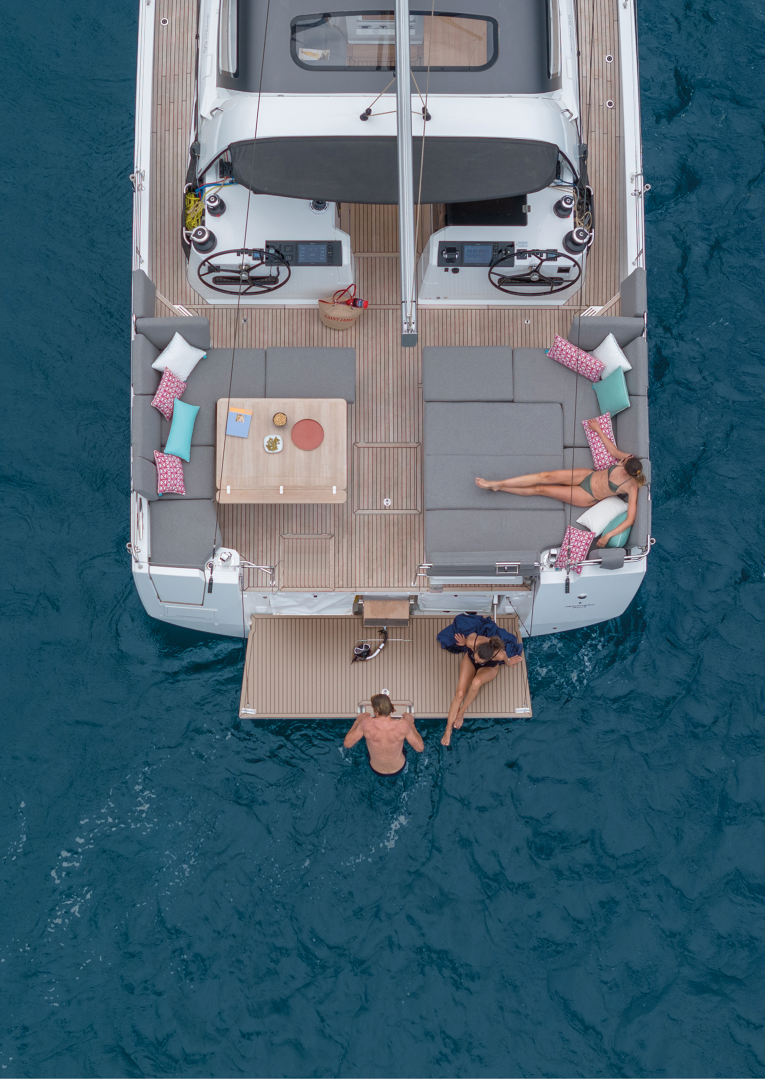
Do not compare yachts based on length alone.
Hull form, beam, deck arrangement, machinery placement, rigging, number of hulls, and intended use all affect how much usable space a yacht provides.
A buyer comparing a 40-foot sailboat with a 40-foot powerboat may find dramatically different:
- Cockpit space
- Salon layout
- Headroom
- Cabin arrangement
- Storage
- Engine access
- Deck movement
- Entertaining areas
This is one reason online research has limits.
Specifications tell you dimensions. They do not tell you whether six people can comfortably move around the cockpit while someone prepares lunch, whether you can access the engine without becoming a contortionist, or whether the berth you thought looked enormous in photographs actually works for you.
Once you have narrowed the decision, get aboard both types.
10. Do You Enjoy Quiet, or Do You Value Convenience More?
This is partly subjective, but it matters.
Sailing under wind power can provide an experience that is difficult to reproduce under engine power: less propulsion noise, the physical feedback of the yacht responding to the wind, and a direct relationship with changing conditions.
For many sailors, that is the point.
Powerboats offer a different kind of satisfaction. Throttle response, maneuverability, speed, systems, and the ability to cover distance efficiently can be equally central to the experience.
Neither preference is more authentic.
Do not buy a sailboat because sailing seems like what a “serious” yachtsman should do. Do not buy a powerboat simply because it appears easier.
Choose the type whose normal operating experience you genuinely enjoy.
11. How Much Hands-On Involvement Do You Want?
Sailing tends to make the crew active participants in propulsion.
Depending on the yacht and its systems, that can involve raising or furling sails, trimming, reefing, tacking, navigating around changing wind, and coordinating crew.
Modern sail-handling equipment can make larger sailing yachts significantly easier to manage than older designs, but sailing remains sailing.
Powerboats can reduce that particular workload, though larger and more sophisticated power yachts introduce plenty of systems management of their own.
Ask yourself what you want to be doing during a typical passage.
12. Are You Choosing for Yourself—or for the Yacht You Think You Should Own?
Yacht purchases can become aspirational very quickly.
You visit a boat show. You see a beautifully photographed yacht. Friends own a particular type. You follow offshore sailing channels. You imagine hosting a dozen people aboard.
Then reality arrives.
Most weekends, perhaps there are two of you.
You do not actually want to cross an ocean.
Your favorite destination is 25 miles away.
You dislike maintaining more systems than necessary.
Or perhaps the opposite is true: you thought you wanted an easy powerboat, but every time you go sailing with friends you wish you were trimming the sails yourself.
The best yacht is not the one that best represents an imagined identity. It is the one that makes you want to use it.
A Quick Sailboat vs. Powerboat Decision Framework
A sailboat may deserve more attention if:
- Sailing itself is one of the main experiences you want.
- You enjoy learning and practicing seamanship.
- You are comfortable letting wind and conditions influence the day’s plan.
- You value the experience of traveling under sail.
- Lower reliance on propulsion fuel matters to you.
- Your available time and intended routes work with typical sailing passage times.
A powerboat may deserve more attention if:
- Reaching destinations efficiently is a high priority.
- Your boating time is limited and you want to cover more distance.
- Entertaining, dayboating, fishing, watersports, or destination cruising drives your plans.
- You do not want sailing itself to be a major part of operating the yacht.
- You are comfortable budgeting for the propulsion and fuel requirements of the boats you are considering.
- The layouts available in your preferred powerboat category better fit your crew and activities.
If you identify with both lists, that is normal. The next step is not another comparison article. Get aboard both.
What If You Already Own a Yacht and Want to Switch?
The sail-versus-power question is not only for first-time buyers.
Experienced owners often change categories because their priorities evolve.
A sailor may decide that shorter travel times and easier destination cruising now matter more.
A powerboat owner may discover an interest in sailing and want the passage itself to become a larger part of the experience.
Before changing, identify what you are trying to solve. That includes considering whether it is time to sell your current yacht before beginning the search for its replacement.
If the problem is simply layout, size, or equipment, another yacht within your existing category may be the better answer.
If the fundamental way you want to spend time on the water has changed, switching from sail to power—or power to sail—may make sense.
Should You Charter Before Choosing Sail or Power?
For an undecided buyer, chartering can provide useful real-world experience.
A few hours at a boat show can help you evaluate layouts and construction, but it cannot show you what it feels like to live with a yacht for several days.
A charter can reveal:
- How much space you actually use
- Whether you enjoy longer sailing passages
- How your family or guests respond to sailing
- Whether speed matters more than expected
- What cabin arrangement works
- Which onboard features you value
- Which features looked important but were rarely used
Chartering will not perfectly reproduce ownership, but it can help clarify preferences before a major purchase. Bluenose’s charter-versus-purchase guide explores that decision in more detail.
What About Catamarans vs. Monohulls?
That is a separate decision.
A sailing catamaran, performance monohull, power catamaran, express cruiser, center-console, trawler, and luxury motor yacht can offer radically different ownership experiences.
Choosing sail or power narrows the field. It does not finish the search.
If you decide sailing is right for you, the next question may be whether a monohull or catamaran better fits your plans. See Bluenose’s catamaran vs. monohull comparison for a deeper look at that choice.
Once You Choose Sail or Power, Start Comparing Actual Yachts
At some point, research has to become shopping.
1. Set your realistic budget.
2. Decide on an approximate size range.
3. Define your normal crew.
4. Identify required accommodations.
5. List must-have equipment.
6. Consider your home waters.
7. Decide whether you prefer new or brokerage.
8. Compare several realistic candidates.
9. Get aboard them.
10. Experience them underway where possible.
Avoid becoming fixated on one model too early.
You may discover that the yacht you expected to love has poor visibility for your height, a cockpit that does not work for your family, difficult engine access, too much draft for your intended cruising, or simply an onboard feel you do not enjoy.
Conversely, a yacht you overlooked online may make immediate sense once you step aboard.
Frequently Asked Questions About Sailboats vs. Powerboats
Should I buy a sailboat or a powerboat?
Choose based on how you actually want to use the yacht. If sailing itself, seamanship, and traveling under wind power are central to the experience you want, focus on sailboats. If speed, destination access, certain activities, or powerboat layouts matter more, focus on powerboats.
Is a sailboat cheaper to own than a powerboat?
Not necessarily. Sailboats generally rely less on fuel for propulsion, while powerboats may have substantially greater fuel requirements. But sailboats also have sails, rigging, and sail-handling equipment to maintain. Size, complexity, condition, location, usage, and equipment can matter more than propulsion category alone.
Is a powerboat easier for a beginner than a sailboat?
Learning basic powerboat operation does not require learning sail handling, but safe powerboating still requires training and competent seamanship. Docking, navigation, weather, rules of the road, emergency procedures, and systems knowledge remain important.
Is a sailboat or powerboat better for New England cruising?
Both can be excellent. A sailor may value New England’s sailing grounds and enjoy the passages between destinations, while a powerboat owner may value covering more coastline within a limited weekend.
Are sailboats better for long-distance cruising?
Some sailing yachts are specifically designed for offshore and bluewater cruising, but “sailboat” alone does not establish offshore suitability. Design, construction, equipment, condition, tankage, systems, crew experience, and route all matter.
Should I test both before deciding?
Whenever practical, yes. Spend meaningful time aboard both sail and power yachts in the size range you are considering.
What if I choose the wrong type of yacht?
A careful buying process reduces that risk. Define your intended use first, charter or gain experience where practical, compare several yachts, and avoid buying primarily around an imagined future lifestyle.
Choose the Yacht You Will Actually Use
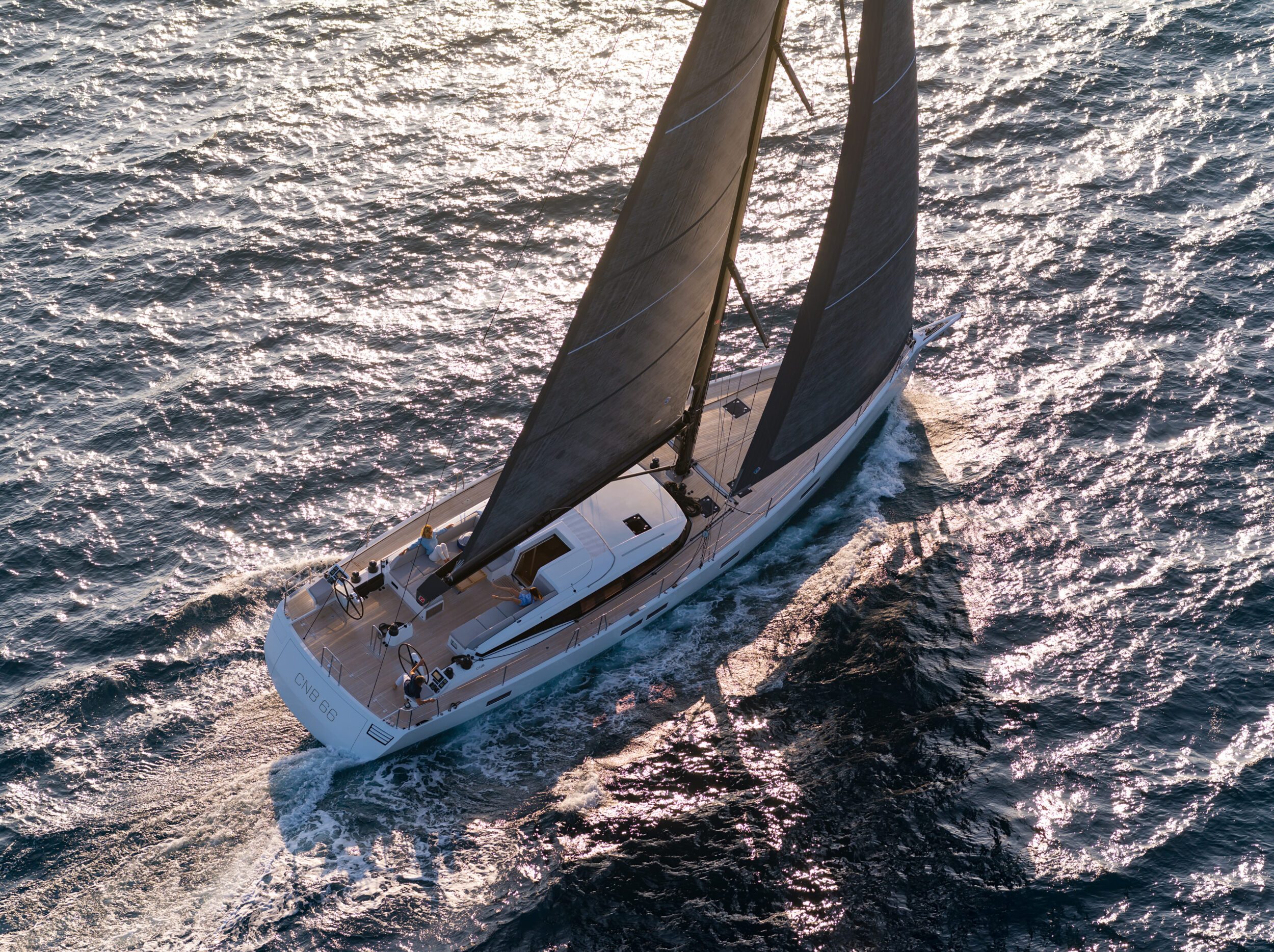
The sailboat-versus-powerboat debate does not need a winner.
It needs an honest buyer.
Think about your normal weekend rather than your dream expedition. Think about the people who will actually be aboard. Consider how far you want to travel, how quickly you want to get there, what you enjoy doing underway, how much involvement you want in operating the yacht, and what you are prepared to maintain.
Then get aboard real boats.
The right yacht should make the experience you want easier to have more often.
For one buyer, that means shutting down the engine, setting the sails, and spending the afternoon working with the wind.
For another, it means advancing the throttles, crossing the bay, and having lunch at a destination that would otherwise consume most of the day to reach.
Both are yachting. The question is which one sounds more like you.
Ready to Compare Sail and Power Yachts?
Browse Bluenose Yacht Sales’ current yachts for sale to compare sailboats and powerboats, or speak with a Bluenose yacht broker about how you intend to use your next yacht. Rather than starting with a particular brand or model, Bluenose can help you narrow the search around your cruising plans, crew, budget, and priorities—and then identify yachts worth seeing in person.