You can browse yacht listings in minutes. Buying the right yacht takes longer.
For some buyers, the search itself is the longest part of the process. Others find a promising yacht quickly but need additional time for negotiations, a marine survey, sea trial, financing, insurance, documentation, and closing.
So, how long does it take to buy a yacht?
There is no single timeline that applies to every purchase. The process has two separate phases: finding the right yacht and completing the transaction once you make an offer. The first can take days, months, or longer depending on your requirements. The second is usually governed by the deadlines in the purchase agreement and the time needed to complete due diligence and closing requirements.
The best approach is not to rush toward an arbitrary closing date. It is to understand each stage, prepare for it in advance, and remove avoidable delays without cutting corners on due diligence.
The Yacht-Buying Timeline Has Two Parts
Phase 1: Finding the right yacht
- Defining how you intend to use the yacht
- Establishing a realistic purchase and ownership budget
- Reviewing available inventory
- Choosing between a sailboat and a powerboat and comparing relevant yacht types
- Speaking with a broker
- Requesting additional information
- Viewing serious candidates
There is no meaningful “average” for this phase.
A buyer looking for a commonly available production sailboat may find several suitable candidates quickly. Someone looking for a particular model, layout, condition, or equipment package may need considerably longer.
Location can add another planning layer, especially when buying a yacht in Newport from out of state or considering vessels that require significant travel.
Phase 2: From offer to closing
1. Written offer and purchase agreement
2. Negotiation and seller acceptance
3. Deposit
4. Survey and haul-out
5. Sea trial
6. Review of findings
7. Acceptance, rejection, or further negotiation as permitted by the agreement
8. Financing and insurance arrangements where applicable
9. Documentation and closing preparation
10. Final settlement and transfer of ownership
11. Delivery or handover
Bluenose’s yacht brokerage process guide follows this same broad progression, covering the buyer’s search, evaluation, purchase agreement, survey, sea trial, and closing.
Step 1: Define What You Are Actually Looking For
A faster yacht purchase begins with a narrower search.
Before comparing listings, decide what matters most to you:
- Sail or power
- New or brokerage
- Approximate size
- Intended cruising area
- Typical crew size
- Number of cabins
- Performance expectations
- Draft or clearance limitations
- Equipment priorities
- Purchase budget
- Ongoing ownership budget
The goal is not to create an impossible specification sheet. It is to know the difference between a requirement and a preference.
If every attractive listing sends you in a different direction, the search can continue indefinitely. A buyer who understands how the yacht will actually be used can eliminate poor fits quickly and spend more time evaluating realistic candidates.
Step 2: Research Listings Before Scheduling Showings
Good preparation can eliminate weeks of unnecessary travel and viewings.
A listing should provide enough information to determine whether a yacht deserves further consideration, but photographs and specifications rarely tell the complete story.
Before committing to a showing, consider asking about:
- Maintenance history
- Service records
- Engine hours where relevant
- Sail and rigging age on sailing yachts
- Electronics
- Major system upgrades
- Generator and auxiliary equipment
- Winter storage history
- Recent yard work
- Known deficiencies
- Items excluded from the sale
For an out-of-state yacht, remote qualification becomes even more important. Additional photographs, records, and broker discussions can help determine whether a trip is worthwhile.
Step 3: View the Strongest Candidates
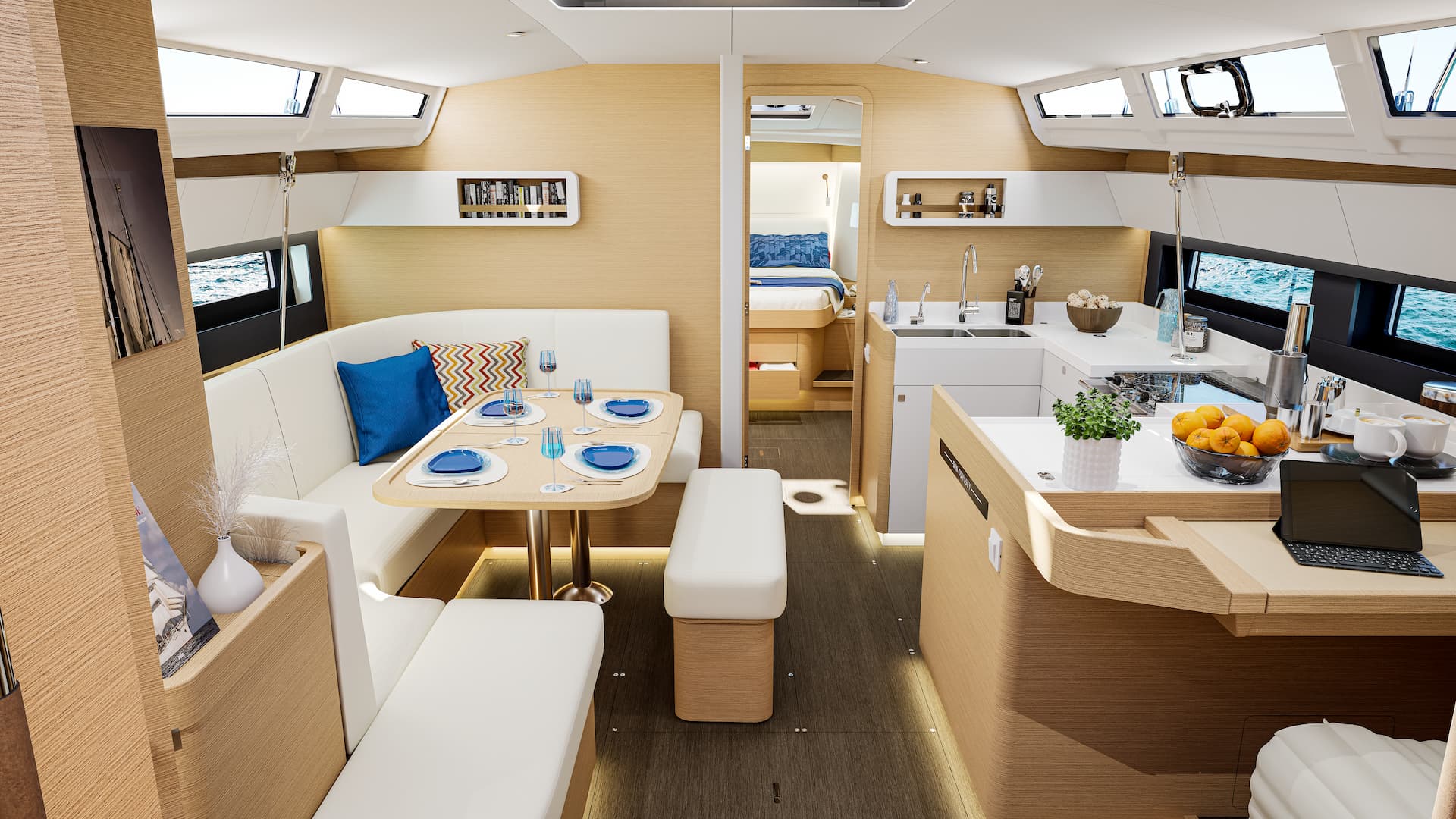
An in-person showing helps answer questions that specifications cannot.
Layout dimensions may look generous online but feel very different aboard. Engine access may be excellent or frustrating. The cockpit may work perfectly for a couple but poorly for the larger group you expect to entertain.
During a showing, focus on whether the yacht fits your intended use and whether its apparent condition supports further due diligence.
This is not the marine survey. You are deciding whether this yacht deserves the time and expense required to move into a formal transaction.
A productive showing should leave you with one of three conclusions: No, Maybe, or Yes.
Step 4: Make a Written Offer
Once you identify the right candidate, the next question is how much to offer on a used yacht and which terms should accompany that offer.
An offer is more than a price.
Depending on the transaction, the agreement can address matters such as:
- Purchase price
- Deposit
- Survey contingency
- Sea-trial contingency
- Financing contingency where applicable
- Included and excluded equipment
- Acceptance deadlines
- Closing date
- Delivery or possession terms
Read the agreement carefully and understand every deadline before signing it.
Price is naturally important, but so are the terms attached to that price. A clear offer with realistic deadlines can move efficiently. An offer built around assumptions or deadlines that cannot actually be met can create problems almost immediately.
How Long Does the Offer and Negotiation Stage Take?
This can be quick—or it can require several rounds of discussion.
A seller may accept the initial offer, reject it, or counter with different price or terms. The buyer may then accept, counter again, or walk away.
Several factors affect the pace:
- How close the parties are on price
- Whether the terms are straightforward
- How quickly buyer and seller respond
- Whether multiple offers are involved
- Whether equipment or exclusions need clarification
- Whether financing or other contingencies require additional planning
Do not create artificial urgency simply because you want the transaction completed quickly.
At the same time, a buyer who has already established a budget and walk-away point can make decisions more efficiently than someone determining those numbers in the middle of the negotiation.
Step 5: Schedule the Marine Survey
Once the offer is accepted and the agreement is in place, the yacht moves into due diligence.
For a brokerage yacht, one of the most important steps is the pre-purchase marine survey.
A comprehensive survey can involve inspection both afloat and out of the water. A haul-out allows the surveyor to examine areas that cannot be properly evaluated with the yacht sitting in the water.
Scheduling can affect the transaction timeline because several calendars may need to align:
- The yacht
- Buyer
- Seller or listing side
- Marine surveyor
- Haul-out facility
- Boatyard or marina
- Broker
- Specialized technicians when needed
Surveyor and yard availability can therefore matter just as much as the inspection itself. Bluenose’s pre-purchase yacht survey guide explains this due-diligence stage in more detail.
Step 6: Complete the Sea Trial
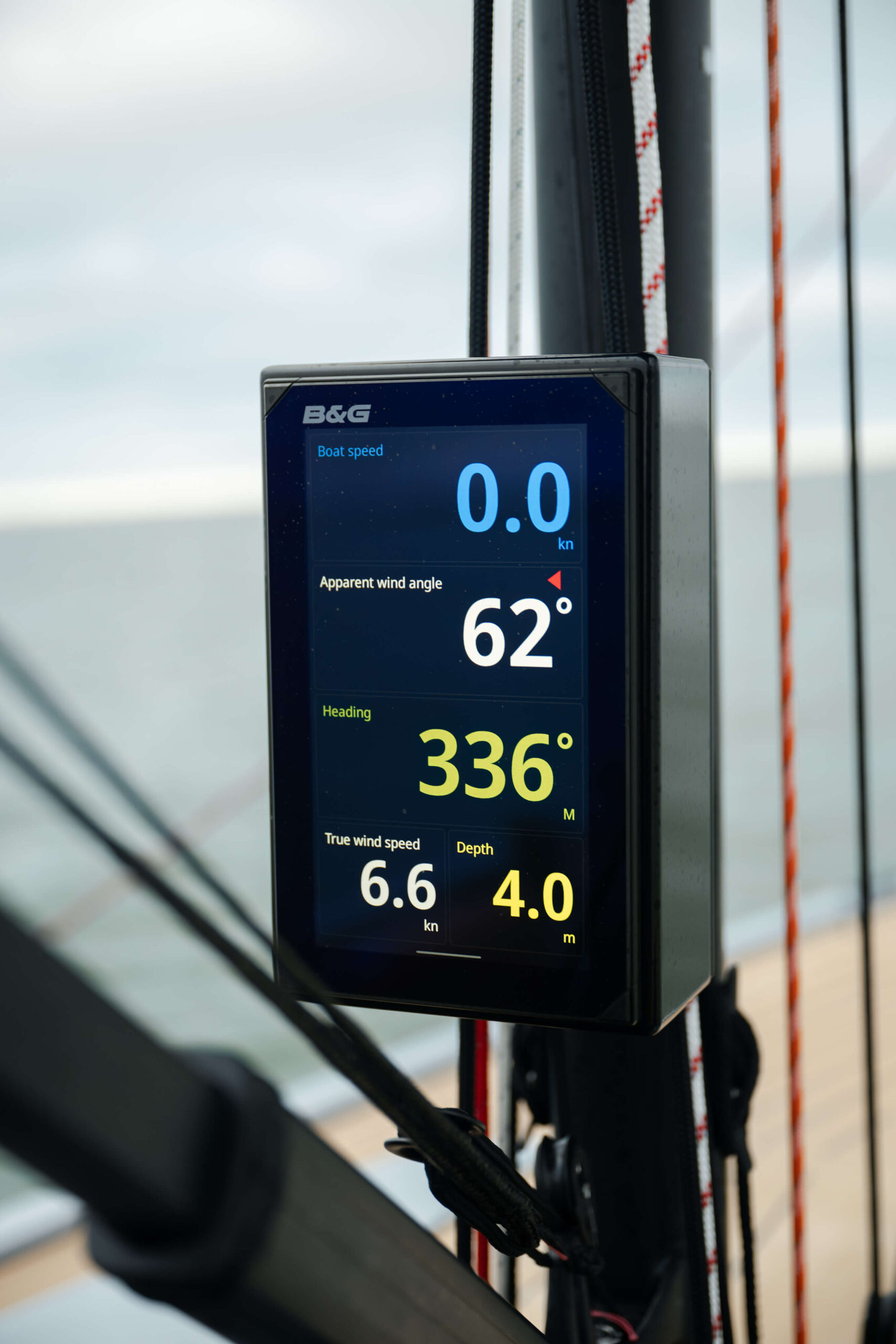
A sea trial allows the yacht to be evaluated under operating conditions.
Depending on the vessel, this can include observing:
- Engine operation
- Steering
- Maneuverability
- Electronics
- Generator and onboard systems
- Vibration or unusual noises
- Sail handling
- Rigging under load
- Helm visibility
- General handling characteristics
The surveyor may have specific operational checks to perform during this period.
For the buyer, there is another important question: Do you still want this yacht after experiencing it underway?
A yacht can look right at the dock and feel wrong once it leaves the harbor. Conversely, a yacht that seemed merely promising during the showing may make much more sense once you experience its handling, ergonomics, performance, and comfort underway.
Step 7: Review the Survey Findings
After the inspection, the surveyor provides findings that help the buyer understand the yacht’s condition.
The report may identify:
- Routine maintenance
- Recommended repairs
- Safety concerns
- Aging equipment
- Structural observations
- System deficiencies
- Items requiring further specialist evaluation
Not every recommendation has the same significance.
An older cosmetic item is different from a major structural or mechanical concern. Buyers should discuss questions with their surveyor and, where appropriate, obtain additional professional evaluation or repair estimates.
What the buyer can do after receiving the report depends on the purchase agreement and applicable deadlines.
Possible outcomes may include proceeding with the purchase, declining the yacht, or addressing material findings with the seller as permitted by the agreement.
Step 8: Arrange Financing, if Needed
A cash purchase eliminates the lender from the process, but financing may add additional requirements and time.
Depending on the lender and transaction, the financing process can involve:
- Credit and financial review
- Vessel information
- Purchase agreement
- Marine survey
- Valuation
- Insurance
- Documentation
- Closing conditions
A buyer who expects to finance the purchase should begin that conversation early rather than waiting until the survey is complete.
Financing does not necessarily cause a long delay. Starting financing late is more likely to cause one.
Step 9: Arrange Yacht Insurance Before Closing
Insurance should also be considered before the final day of the transaction.
The information an insurer requests depends on the yacht and buyer, but vessel characteristics, intended cruising area, ownership experience, survey findings, and other factors can affect underwriting.
Some buyers assume insurance is something to arrange once they own the yacht. That can create a problem.
Coverage generally needs to be ready when ownership transfers, and a lender will ordinarily require appropriate insurance as part of financing.
Begin the insurance conversation early enough that an unexpected request does not become the reason the closing date moves.
Step 10: Prepare for Documentation and Closing
The final stage brings together the financial and ownership-transfer pieces of the transaction.
Depending on the particular yacht and ownership structure, closing preparation can involve:
- Purchase documentation
- Title or ownership records
- Registration or federal documentation as applicable
- Lien releases where necessary
- Final funds
- Insurance
- Included-equipment confirmation
- Closing statements
- Delivery arrangements
Complex ownership histories, unresolved liens, missing paperwork, international registrations, financing, or unusual ownership structures can add time.
A straightforward transaction with organized documents can move more efficiently.
The lesson is simple: closing speed depends partly on work completed before closing day.
Step 11: Take Delivery of the Yacht
Closing is not necessarily the final logistical step.
Before ownership transfers, know what you intend to do with the yacht.
Will it remain where it is? Move to another marina? Be delivered by a professional captain? Travel over land? Be transported to another region? Need commissioning or service before departure?
If you are buying a yacht far from home, delivery planning should begin before closing rather than after.
A buyer who completes the financial transaction but has no plan for the yacht’s next location has solved only part of the problem.
So, How Long Does It Actually Take to Buy a Yacht?
The most accurate answer is: It depends on whether you mean finding the yacht or closing on one you have already found.
The search can take as little or as much time as necessary to identify the right boat.
After an offer is accepted, the timeline is shaped by the purchase agreement and practical requirements such as survey scheduling, haul-out availability, sea trial, financing, insurance, documentation, and closing.
The more useful guidance is not a fixed number. Prepare early, know the deadlines in your agreement, keep the required professionals moving in parallel where appropriate, and do not sacrifice due diligence simply to reach closing faster.
What Can Make a Yacht Purchase Move Faster?
Know what you want before shopping
A defined search prevents months of evaluating yachts that never fit your intended use.
Have funds or financing preparation in place
Knowing your budget and financing approach allows you to act when the right yacht appears.
Work with responsive professionals
A broker, surveyor, lender, insurance professional, and closing/documentation professionals who communicate effectively can help keep each stage moving.
Request records early
Maintenance records, equipment information, and other available documentation can help buyers identify questions before survey day.
Schedule the survey promptly
Qualified surveyors and haul-out facilities can have busy calendars, particularly during active boating seasons.
Read the purchase agreement carefully
Missing a deadline because you did not understand it is an avoidable delay.
Begin insurance and financing work before the last minute
These processes may depend on survey information, but initial conversations can begin earlier.
Plan delivery in advance
Do not wait until closing to decide how the yacht will reach its new home.
What Commonly Delays a Yacht Purchase?
Difficulty finding the right yacht
The right boat may simply not be on the market when you begin looking.
Slow negotiations
Large differences in price or terms can extend the offer stage.
Survey scheduling
The yacht, surveyor, haul-out facility, buyer, and other parties may all need to be available.
Significant survey findings
Important deficiencies may require further evaluation, repair estimates, or additional negotiations.
Financing
Incomplete documentation or beginning the loan process late can slow closing.
Insurance underwriting
The insurer may request survey information, repairs, experience documentation, or other information before binding coverage.
Documentation problems
Ownership records, liens, registrations, or other documentation issues can require additional work before transfer.
Weather
Weather can affect sea trials, haul-outs, deliveries, and access—particularly in seasonal boating markets such as New England.
Seasonal storage
A yacht that is winterized and stored ashore may require additional coordination before a sea trial can occur.
Can You Buy a Yacht Faster by Skipping the Survey?
Skipping important due diligence is not a sensible way to create a faster transaction.
A pre-purchase survey gives the buyer independent information about the yacht’s condition and can also be relevant to financing and insurance.
Buying faster is useful only when the process remains sound.
The objective should be to remove administrative delays, not remove the steps designed to protect the quality of your decision.
Should You Rush Because Another Buyer Is Interested?
Competition can create real time pressure.
A desirable, competitively priced yacht may attract more than one buyer. In that situation, being prepared matters.
You may be able to respond more effectively when you already know your budget, preferred terms, walk-away point, financing position, which surveyors you may contact, and what you need from the yacht.
But another buyer’s interest does not change whether the yacht fits your needs or eliminate the need for appropriate due diligence.
Act decisively when the right yacht appears. Do not confuse decisiveness with haste.
Frequently Asked Questions About the Yacht-Buying Timeline
How long does it take to buy a used yacht?
There is no universal timeline. Finding the right yacht may take days or months. Once an offer is accepted, the purchase agreement establishes deadlines for survey, sea trial, acceptance, and closing.
What happens after my offer on a yacht is accepted?
The transaction generally moves into due diligence. Depending on the agreement, that can include paying a deposit, arranging a survey and haul-out, conducting a sea trial, reviewing findings, completing financing or insurance requirements, and preparing for closing.
How soon should I schedule the yacht survey?
As soon as practical after the agreement is in place and within the deadlines specified by the contract.
Does a yacht survey happen before or after the offer?
In a typical brokerage purchase, a written offer and purchase agreement are made before the formal pre-purchase survey, with the purchase commonly made subject to satisfactory survey or other provisions stated in the agreement.
How long does it take to close on a yacht after the survey?
It depends on the purchase agreement and whether anything remains unresolved. Survey findings, financing, insurance, documentation, repairs or credits, and closing paperwork can all affect timing.
Does financing make buying a yacht take longer?
It can add requirements to the process, but much of the financing preparation can begin before survey completion.
Can I buy a yacht remotely?
Many parts of the process can be handled remotely. If you are buying a yacht from out of state, you can review listings, discuss the yacht with a broker, exchange documents, and coordinate professionals before deciding when travel is necessary.
A Good Yacht Purchase Is Efficient, Not Rushed
The fastest yacht purchase is not necessarily the best one.
You want enough preparation that when the right yacht appears, you are ready to move. You want an offer built around realistic terms. You want the survey, sea trial, insurance, financing, documentation, and closing processes coordinated efficiently.
But you also want enough time to understand what you are buying.
The better goal is an efficient transaction with complete due diligence.
Define your requirements early. Research realistic candidates. Know your budget. Work with experienced professionals. Understand every deadline. Prepare financing and insurance before they become emergencies.
Then let the complexity of the actual yacht and transaction determine the timeline—not an arbitrary promise that buying a yacht should take a certain number of days.
Ready to Begin Your Yacht Search?
Browse Bluenose Yacht Sales’ current yachts for sale or speak with a Bluenose yacht broker about the kind of yacht you are looking for, your timing, and how you plan to use it. Whether you have just started researching or already have a specific yacht in mind, Bluenose Yacht Sales can help you move through the search, offer, survey, sea trial, and closing process with a clearer understanding of what comes next.