You have found a used yacht that checks the important boxes. The size is right, the layout works, the equipment looks promising, and you can picture yourself at the helm. Then comes one of the most difficult questions in the buying process:
How much should you offer?
There is no reliable rule that says a used yacht buyer should automatically offer 5, 10, or 20 percent below the asking price. An asking price is a starting point in a specific transaction—not a formula for determining what the yacht is worth.
A smart offer considers the yacht itself, comparable boats, its equipment and condition, its history on the market, current demand, and the terms attached to your offer. Just as importantly, it reflects what the yacht is worth to you once you account for the costs of ownership and any work you already expect to undertake.
The goal is not simply to pay as little as possible. It is to make an informed, defensible offer that gives you a realistic opportunity to buy the right yacht at a price you can justify.
Start With the Yacht, Not a Percentage
The problem is that the percentage alone tells you almost nothing.
One yacht may be competitively priced after recent reductions, while another may have entered the market at an ambitious asking price. One may have updated sails, electronics, machinery, and systems; another of the same model year may be approaching several expensive replacement cycles.
A yacht that has just reached the market is also a different negotiating situation from one that has remained available through an entire selling season.
Instead of beginning with “How far below asking should I offer?” begin with a better question:
What evidence supports the price I am prepared to pay for this particular yacht?
That shift turns the offer from a guessing exercise into a buying decision.
1. Research Comparable Yachts
Comparable boats—or “comps”—are one of the most useful starting points for evaluating an asking price.
Look for yachts that are genuinely comparable in:
- Manufacturer and model
- Model year or generation
- Length and configuration
- Engine and propulsion package
- Sail plan, where applicable
- Equipment
- Condition
- Location
- Significant upgrades or refits
The closest comparison is not always another yacht with the same length printed in the listing.
Two 40-foot cruising sailboats can occupy very different positions in the market. Even two examples of the same model can differ significantly depending on maintenance, equipment, usage, storage history, and upgrades.
Current listings can tell you what other sellers are asking, but asking prices do not necessarily tell you what comparable yachts have actually sold for.
This is one area where working with an experienced yacht broker can be valuable. A broker can help put the asking price in the context of the broader market rather than evaluating the boat in isolation.
2. Look Closely at What Is Included

Equipment can materially affect the value proposition of a used yacht, but buyers should distinguish between valuable upgrades and an owner’s personal spending.
Depending on the yacht, relevant equipment may include:
- Recent sails and rigging
- Updated navigation electronics
- Generator
- Air conditioning or heating
- Bow or stern thrusters
- Tender and davit systems
- Watermaker
- Updated batteries or charging systems
- Recent canvas and enclosure work
- Ground tackle
- Safety equipment
- Recent engine or propulsion work
A well-equipped yacht may justify a higher price than a seemingly comparable example if those systems are useful to you and would otherwise need to be added soon after purchase.
However, upgrades rarely deserve to be valued simply at their original invoice cost. Equipment depreciates, technology ages, and some modifications may have little value to the next owner.
Evaluate equipment according to its current condition, remaining useful life, quality of installation, and relevance to how you plan to use the yacht.
3. Consider Condition Before You Make the Offer
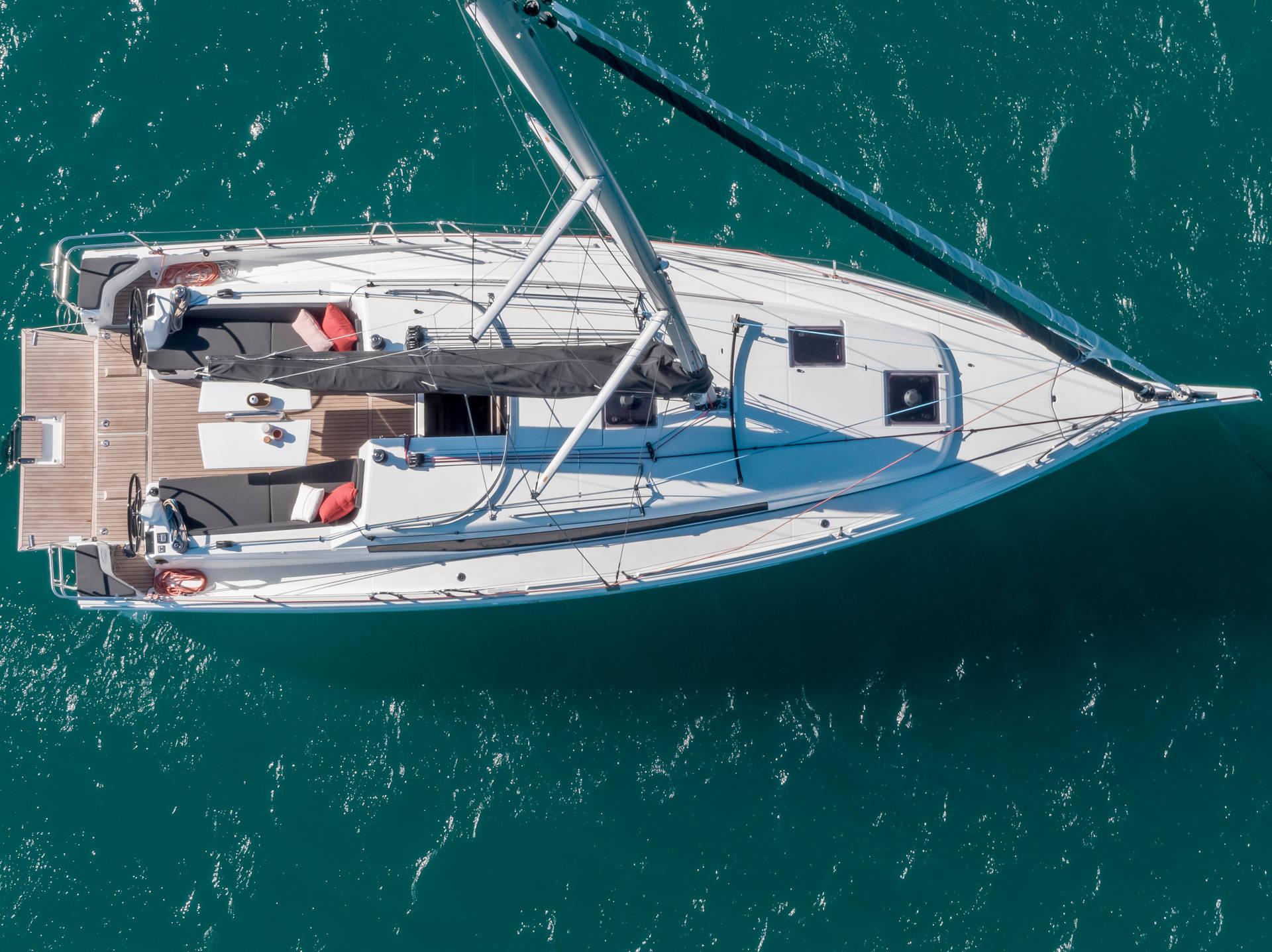
The formal pre-purchase survey comes later, but you can learn a great deal before reaching that stage.
During your initial viewing, look at the yacht as an owner rather than simply as an admirer.
Does the boat appear consistently maintained? Are the bilges clean? Does the machinery space suggest regular attention? Are the sails, canvas, upholstery, brightwork, deck hardware, electronics, and interior consistent with the asking price?
Ask for available maintenance and service records. Find out when major components were last serviced or replaced.
You are not trying to conduct your own marine survey. You are trying to determine whether the yacht’s apparent condition supports the asking price and whether there are obvious near-term expenses that belong in your overall purchasing budget.
A yacht that needs significant work is not automatically worth the estimated repair cost less than an otherwise similar yacht. But known work should be part of the financial picture before you decide what you are comfortable paying.
The professional survey remains a separate and essential due-diligence step after an offer is accepted.
4. Pay Attention to Time on Market and Price History
How long a yacht has been for sale can provide context, but it should not be treated as a simple discount calculator.
A yacht that came to market last week at a well-supported price may leave little room for negotiation, particularly if there is active buyer interest.
A yacht that has been listed for a considerable period may present a different situation. But time on market can have many explanations:
- The original asking price was too high
- The yacht has already received meaningful price reductions
- Demand for the model is limited
- The yacht is unusual or highly specialized
- Location makes showings difficult
- Previous deals failed to close
- The seller is under no pressure to sell
Price history matters for the same reason.
If the seller has already reduced the asking price substantially, assuming there is another large automatic discount available may be unrealistic. Conversely, a long-standing asking price that is poorly aligned with comparable yachts deserves closer examination.
A broker can help interpret these signals in context rather than assuming that “days on market” equals negotiating leverage.
5. Separate Asking Price From Your Ownership Budget
A common mistake is focusing so heavily on winning the negotiation that the buyer loses sight of the total cost of owning the yacht.
Suppose you can afford a particular purchase price—but doing so would leave little room for commissioning, dockage, insurance, maintenance, storage, initial repairs, equipment changes, or the upgrades you already know you want.
That may not be the right offer for your budget, even if it represents fair market value.
Before deciding on a number, think beyond closing day.
Consider the funds you want available for:
- Immediate maintenance
- Insurance
- Storage or dockage
- Registration/documentation expenses as applicable
- Transportation or delivery
- Equipment you consider essential
- Known service items
- An appropriate maintenance reserve
Buyers evaluating the upper end of their purchase budget should consider the broader costs of yacht ownership before committing to an offer.
6. Decide on Your Walk-Away Number Before Negotiating
Before the first offer is submitted, decide what the yacht is worth to you.
This does not necessarily mean choosing an arbitrary hard ceiling without regard to new information. It means understanding the point at which the purchase stops making financial or practical sense.
Your number may reflect:
- Comparable yachts
- Apparent condition
- Expected near-term spending
- Your overall ownership budget
- Alternative yachts available
- How closely this yacht matches your requirements
- How difficult it would be to find another comparable example
Knowing your limit before negotiations become emotional can help you make better decisions.
The wrong yacht does not become the right yacht simply because you have invested time traveling to see it or spent weeks negotiating for it.
Likewise, losing an unusually good yacht over a relatively small difference can be a poor outcome if the final price would still have represented good value to you.
The objective is not to “win” against the seller. It is to reach terms under which buying the yacht makes sense.
7. Remember That Price Is Only One Part of an Offer
A yacht purchase offer includes more than a dollar amount.
The written agreement can address matters such as:
- Purchase price
- Deposit
- Survey and sea-trial provisions
- Acceptance or rejection dates
- Closing date
- Included equipment
- Delivery arrangements
- Financing or other contingencies where applicable
The exact terms depend on the transaction and the purchase agreement being used.
This is why two offers at the same price may not look equally attractive to a seller. A well-prepared buyer with clear terms and a realistic timeline may present a different proposition from someone whose offer contains substantial uncertainty.
Before signing a purchase agreement, read it carefully and make sure you understand your obligations, deadlines, contingencies, and rights.
8. Don’t Use the Survey as an Excuse for an Artificially High Offer
A pre-purchase survey is intended to help you understand the yacht’s condition—not to provide a strategy for making an unrealistic initial offer.
Make the initial offer based on what you reasonably know at the time.
If the seller accepts and the survey subsequently uncovers material issues that were not apparent beforehand, those findings can change your understanding of the yacht. What happens next depends on the purchase agreement and the nature of the findings.
If material issues appear during due diligence, review Bluenose’s pre-purchase yacht survey guide for a closer look at evaluating findings and deciding what comes next.
9. Know When a Strong Offer Makes Sense
Negotiating does not always mean starting low.
A stronger initial offer can make sense when:
- The yacht has been priced competitively
- It is a particularly desirable model
- Comparable inventory is scarce
- The condition is unusually good
- The yacht has recently entered the market
- You know there is legitimate competing interest
- The boat closely matches difficult-to-find requirements
A buyer who automatically discounts every asking price risks losing the right yacht simply to follow a negotiating convention.
On the other hand, urgency should not replace due diligence. Competition from another buyer does not make an unsuitable yacht suitable, and it does not eliminate the need to understand the agreement you are signing.
10. Use a Yacht Broker to Put the Offer in Context
Online listings make it easier than ever to research yachts, but a listing page does not always provide enough context to determine a sensible offer.
An experienced yacht broker can help a buyer:
- Compare the yacht with relevant alternatives
- Understand how equipment and condition affect its market position
- Review the listing and available records
- Structure and present an offer
- Understand the purchase agreement and transaction milestones
- Coordinate the next steps if the offer is accepted
For more context on the transaction itself, review Bluenose’s yacht brokerage process.
The broker’s role is not simply to suggest a lower number. Good guidance helps a buyer determine whether the yacht and the proposed transaction make sense in the first place.
For buyers considering a yacht in New England or elsewhere, Bluenose Yacht Sales can help evaluate available yachts and navigate the brokerage process from initial search through closing.
Frequently Asked Questions About Making an Offer on a Used Yacht
How much below asking price should I offer on a used yacht?
There is no dependable percentage that applies to every used yacht. A reasonable offer depends on comparable yachts, condition, equipment, time on market, pricing history, demand, and the terms of the transaction. Start with evidence rather than automatically subtracting a fixed percentage from the asking price.
Can I make a low offer on a yacht?
You can offer less than the asking price, but an unsupported low offer may simply be rejected or make productive negotiation more difficult. If you believe the yacht is overpriced, base your offer on relevant market evidence and the yacht’s condition rather than an arbitrary discount.
Should I get a survey before making an offer?
In a typical brokerage transaction, the offer and purchase agreement come before the buyer’s formal pre-purchase survey, with the agreement addressing the survey and sea trial.
Can the price change after a yacht survey?
Material findings can affect the buyer’s assessment of the transaction. What options are available depends on the purchase agreement and circumstances. Buyers should understand their agreement and deadlines rather than assume every survey finding automatically produces a price reduction.
Is asking price the same as market value?
No. Asking price is what the seller is requesting. Market value is informed by factors such as comparable yachts, condition, equipment, demand, and actual market activity.
Make an Offer Based on the Yacht—not a Rule of Thumb
The right offer on a used yacht is not determined by a universal percentage.
Research the market. Understand what makes the yacht different from its comparables. Look realistically at condition and upcoming expenses. Establish the price at which the yacht makes sense for your goals, and pay attention to the terms surrounding the number.
Most importantly, keep the purpose of the negotiation in perspective: you are trying to buy the right yacht on terms you can be comfortable with after the excitement of the purchase has passed.
Ready to Start Your Yacht Search?
Explore Bluenose Yacht Sales’ current yachts for sale or speak with a Bluenose yacht broker about the type of yacht, budget, and ownership plans you have in mind. Whether you are comparing several brokerage yachts or preparing to make an offer on a specific boat, experienced guidance can help you approach the purchase with better information and greater confidence.